
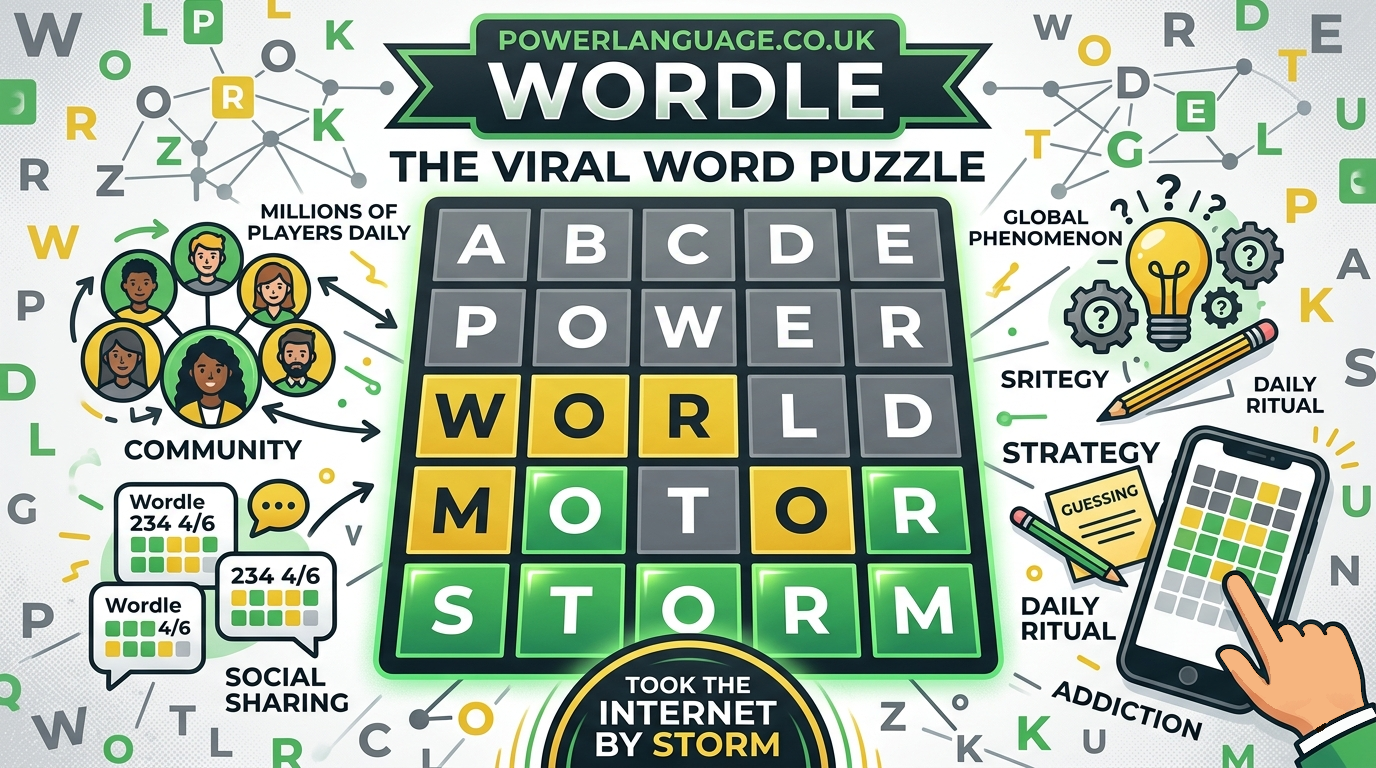
Introduction to Wordle UK
Wordle UK has become one of the most talked-about word games in recent years. What started as a simple daily puzzle quickly transformed into a global phenomenon, attracting millions of players from different countries and backgrounds. In the United Kingdom, Wordle has gained a particularly strong following due to the nation’s long-standing appreciation for language, puzzles, and intellectual challenges.
The beauty of Wordle lies in its simplicity. Players are given six attempts to guess a five-letter word. After each guess, the game provides feedback using colored tiles that indicate whether letters are correct and whether they are positioned correctly. This straightforward concept creates a surprisingly engaging experience that keeps people coming back every day.
Unlike many modern games that rely on complex mechanics, flashy graphics, or endless levels, Wordle succeeds because of its minimalism. The game presents a single puzzle each day, encouraging players to focus on quality rather than quantity. This daily format has become one of the main reasons for its enduring popularity.
For UK players, Wordle offers more than just entertainment. It serves as a daily mental exercise that promotes vocabulary development, pattern recognition, and strategic thinking. Many players consider solving the puzzle part of their morning routine, similar to reading the news or enjoying a cup of tea.
The rise of Wordle UK demonstrates that simple ideas can still capture widespread attention in a world dominated by increasingly sophisticated digital entertainment. Its success proves that people continue to value thoughtful challenges that engage the mind.
The Origins of Wordle
Understanding Wordle UK’s popularity requires examining the game’s origins. Wordle was originally created by software engineer Josh Wardle as a personal project. The game was initially designed as a fun activity for his partner, who enjoyed word puzzles.
What makes this story remarkable is how quickly the game evolved from a private pastime into a worldwide sensation. After being shared publicly, Wordle spread through social media platforms at an extraordinary pace. Players enjoyed the challenge and appreciated the ability to share their results without revealing the answer.
The game’s unique sharing system played a major role in its growth. Instead of posting spoilers, users shared colored grid patterns that showed their progress. This created curiosity among friends and encouraged more people to try the puzzle themselves.
The simplicity of the concept was another significant factor in its success. Wordle required no downloads, subscriptions, or complicated tutorials. Anyone could visit the website and start playing within seconds. This accessibility appealed to players of all ages and technical backgrounds.
As Wordle’s popularity expanded across the United Kingdom, it quickly became a cultural phenomenon. Newspapers, television programs, and online communities began discussing daily solutions and strategies, further increasing public interest.
Why Wordle Became So Popular in the UK
The United Kingdom has a rich history of word games and language-based entertainment. Crossword puzzles, Scrabble, and various word challenges have long been popular among British audiences. Wordle fits naturally within this tradition.
One reason for the game’s success is its accessibility. Unlike many games that require significant time commitments, Wordle can be completed in just a few minutes. This convenience makes it easy to incorporate into daily routines without disrupting schedules.
Another factor is the social aspect. Friends, family members, and colleagues frequently discuss their daily results. Comparing scores and sharing strategies has become a common activity, creating a sense of community among players.
British culture also places a strong emphasis on language and communication. The challenge of identifying hidden words appeals to people who enjoy testing their vocabulary and analytical abilities. Wordle provides a satisfying balance between difficulty and accessibility.
Additionally, the game’s once-per-day format helps maintain interest. Because there is only one puzzle available each day, players do not experience the burnout often associated with endless gaming experiences. This scarcity contributes to anticipation and excitement.
The combination of intellectual stimulation, social interaction, and simplicity has made Wordle particularly appealing to UK audiences.
How Wordle Works
At its core, Wordle is easy to understand. Players must guess a five-letter word within six attempts. After each guess, the game provides feedback using colored tiles.
A green tile indicates that a letter is correct and positioned correctly within the word. This information is extremely valuable because it confirms both the letter and its placement. Players often build their strategy around identifying green tiles early.
Yellow tiles indicate that a letter appears in the word but is located in a different position. This feedback narrows down possible solutions while encouraging players to rearrange letters strategically.
Gray tiles indicate that a letter does not appear in the target word at all. Eliminating letters is just as important as identifying correct ones because it reduces the number of possible combinations.
The challenge comes from interpreting this information effectively. Successful players use logic, probability, and vocabulary knowledge to refine their guesses and identify the correct word before running out of attempts.
Although the rules are simple, mastering the game requires practice and strategic thinking. This balance between accessibility and depth is one of Wordle’s greatest strengths.
The Psychology Behind Wordle’s Success
Wordle’s popularity is not accidental. The game incorporates several psychological principles that make it highly engaging and satisfying.
One important factor is the sense of achievement. Solving the daily puzzle provides a small but meaningful victory. These positive experiences encourage players to return each day for another challenge.
The game also creates anticipation. Because only one puzzle is available daily, players look forward to the next opportunity. This anticipation strengthens engagement while preventing excessive play.
Another psychological element is pattern recognition. Humans naturally enjoy identifying patterns and solving problems. Wordle taps directly into this instinct by challenging players to uncover hidden word structures.
Social validation plays a role as well. Sharing results allows players to demonstrate their success while participating in a larger community experience. Seeing friends solve the puzzle encourages continued participation.
The combination of challenge, reward, anticipation, and social interaction creates a powerful formula that keeps players engaged over extended periods.
Effective Strategies for Wordle UK
While luck can influence individual puzzles, consistent success in Wordle depends largely on strategy. Experienced players often follow specific approaches that increase their chances of solving the puzzle efficiently.
One common strategy is choosing a strong starting word. Words containing frequently used vowels and consonants provide valuable information early in the game. Examples include words featuring letters such as E, A, R, T, and S.
Another important technique involves maximizing information. Instead of focusing immediately on finding the correct answer, many skilled players use early guesses to identify as many letters as possible. This approach creates a stronger foundation for later attempts.
Paying attention to letter positioning is equally important. A yellow tile provides useful information, but players must carefully consider where the letter can logically fit within the word.
Successful players also remain flexible. Becoming overly attached to a particular theory can lead to mistakes. Adapting strategies based on new information often produces better results.
Over time, consistent practice helps players recognize common word patterns and improve their decision-making abilities.
The Educational Benefits of Playing Wordle
Wordle offers more than entertainment. It also provides several educational benefits that contribute to cognitive development and language skills.
Vocabulary expansion is one of the most obvious advantages. Players regularly encounter words they may not have used recently, helping reinforce language knowledge and improve word recognition.
Spelling skills also benefit from regular play. Because players must enter valid words, they become more familiar with correct letter sequences and common spelling patterns.
Critical thinking is another important area of development. Wordle requires players to analyze information, evaluate possibilities, and make logical decisions based on available evidence.
Memory plays a significant role as well. Players must remember previous guesses, eliminated letters, and confirmed positions while formulating new strategies.
For students, professionals, and lifelong learners, Wordle provides an enjoyable way to exercise the brain and strengthen important cognitive skills.
Wordle UK and Social Media
Social media has played a crucial role in Wordle’s growth. Platforms such as Twitter, Facebook, and other networks helped transform the game into a global conversation.
The colored grid-sharing system was particularly innovative. Players could post their results without revealing the answer, allowing others to enjoy the puzzle independently.
This sharing mechanism created curiosity and encouraged participation. People who repeatedly saw Wordle grids often became interested in trying the game themselves.
Social media discussions also fostered community engagement. Players exchanged strategies, celebrated achievements, and debated particularly challenging puzzles.
In the UK, these conversations helped establish Wordle as a daily cultural event. Many people now view sharing their results as an integral part of the overall experience.
The relationship between Wordle and social media demonstrates how simple design choices can significantly influence a game’s success and cultural impact.
Common Mistakes Players Make
Even experienced players occasionally make mistakes that reduce their chances of success. Understanding these common errors can improve performance significantly.
One frequent mistake is ignoring available information. Some players become focused on specific words and fail to incorporate feedback from previous guesses effectively.
Another common issue is repeating eliminated letters unnecessarily. Gray tiles indicate that certain letters are not present, so continuing to use them wastes valuable opportunities.
Many players also underestimate the importance of letter positioning. Knowing that a letter exists is helpful, but understanding where it can and cannot appear is equally important.
Rushing decisions can also lead to problems. Taking a few extra moments to analyze possibilities often results in better choices and improved outcomes.
Avoiding these mistakes helps players approach puzzles more strategically and increases their overall success rate.
The Future of Wordle UK
The future of Wordle UK appears promising. Despite the emergence of countless imitators and alternative puzzle games, Wordle continues to maintain a loyal player base.
One reason for this durability is its timeless appeal. Word puzzles have remained popular for generations, and Wordle successfully adapts this tradition for the digital age.
The game’s simplicity also supports long-term sustainability. Because it avoids excessive complexity, it remains accessible to new players while retaining experienced fans.
As educational institutions increasingly recognize the value of gamified learning, Wordle may continue influencing language education and cognitive training initiatives.
Future developments could introduce new features while preserving the core gameplay experience that players love. Regardless of specific changes, Wordle’s impact on digital puzzle culture is already significant.
Conclusion
Wordle UK has earned its place as one of the most successful word games of the modern era. Its combination of simplicity, strategy, accessibility, and social interaction creates an experience that appeals to a wide audience.
The game’s popularity reflects a broader appreciation for intellectual challenges that are both enjoyable and rewarding. Whether played for entertainment, education, or friendly competition, Wordle offers something valuable to every participant.
As millions of players continue solving daily puzzles, Wordle remains a powerful example of how a simple idea can achieve extraordinary success. Its influence extends beyond gaming, demonstrating the enduring appeal of language, logic, and shared experiences in the digital age.











Leave a Reply