
Dow Jones Today: What Is Happening in the Market?
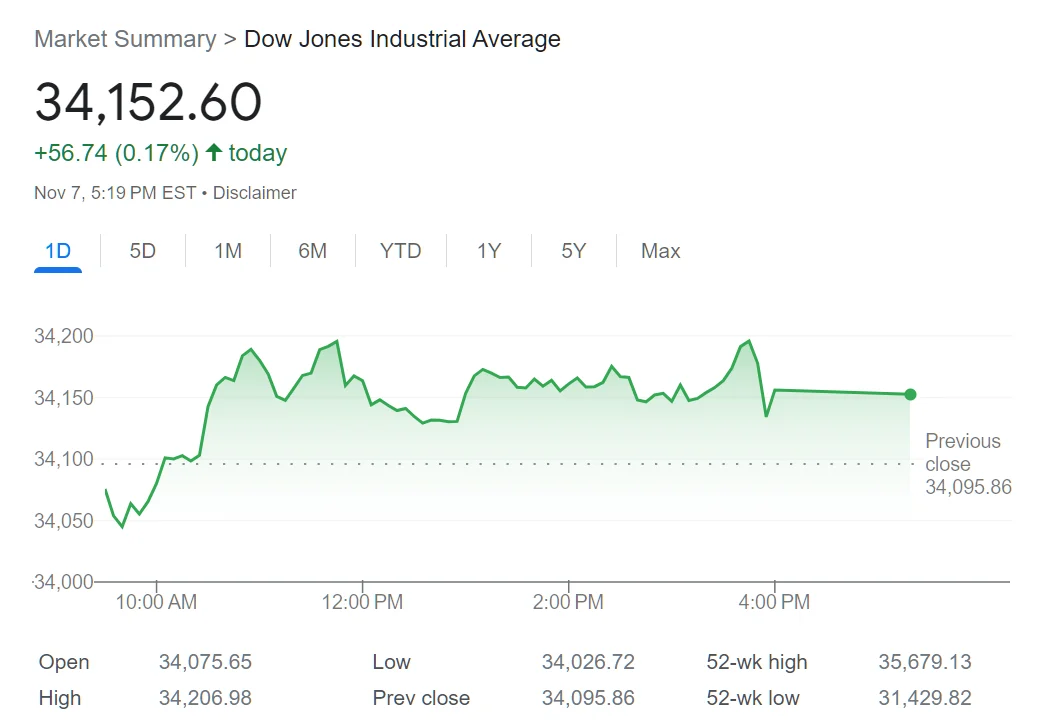
When people search for “Dow Jones today,” they are usually looking for one simple thing: what is the Dow doing right now? They may want to know whether the index is rising or falling, what is moving the market, which companies are leading the gains, and what the latest economic news means for investors. The Dow Jones Industrial Average, commonly called the Dow or DJIA, remains one of the most closely watched indicators of the U.S. stock market.
The Dow has had a particularly interesting run recently. During the first week of August 2026, the index moved to record levels, with the Dow closing at 54,085.88 on August 4 after gaining 907.47 points, or about 1.7%, in that session. The S&P 500 also reached a record close that day, while the Nasdaq posted a strong gain.
However, investors should not assume that a record high means stocks will continue moving upward every day. Markets can change direction quickly when investors receive new information about inflation, interest rates, energy prices, corporate earnings, employment, or geopolitical developments. That is why checking the Dow Jones today involves more than looking at one number.
What Is the Dow Jones Industrial Average?
The Dow Jones Industrial Average is a stock-market index designed to track the performance of 30 major U.S. companies. It is one of the oldest and most recognizable stock indexes in the world. Although the modern economy is much broader than the industrial economy that existed when the index was created, the Dow has evolved over time by changing its constituents.
The DJIA was launched on May 26, 1896. It originally contained 12 companies, while today’s version consists of 30 large blue-chip businesses. S&P Dow Jones Indices marked the index’s 130th anniversary in 2026 and noted how dramatically the benchmark has changed since its creation.
One important thing to understand is that the Dow is price-weighted. That means companies with higher share prices have a greater influence on the index’s point movement than companies with lower share prices, regardless of their total market capitalization. This makes the Dow different from indexes such as the S&P 500, which are weighted according to market value.
Why People Search for Dow Jones Today
The phrase “Dow Jones today” has become a popular search because the index provides a quick snapshot of market sentiment. When the Dow is rising strongly, investors may interpret that as evidence of optimism about corporate earnings, the economy, or monetary policy. When it falls sharply, attention often turns toward economic risks, inflation, interest rates, or geopolitical uncertainty.
Another reason people follow the Dow is its connection to major household-name companies. The index includes established businesses from different areas of the American economy. Because these companies have significant economic footprints, their earnings and share-price movements can sometimes offer clues about broader business conditions.
Still, the Dow should not be treated as a complete representation of every publicly traded U.S. company. Thirty stocks cannot capture every part of the market. The Nasdaq is more heavily influenced by technology companies, while the S&P 500 provides a broader view of large-cap U.S. equities. Looking at all three can give investors a more balanced picture.
Dow Jones Today: The Latest Market Picture
The latest market environment has been unusually strong but also increasingly sensitive to new information. Recent trading showed the Dow reaching fresh records, supported by improving investor confidence, corporate earnings, and changing expectations around monetary policy. The index’s strong advance during the first week of August helped reinforce the bullish tone that had developed across U.S. equities.
At the same time, the beginning of the new trading week introduced another layer of uncertainty. Reports on August 10 indicated that Dow futures were lower while oil prices were moving higher, creating a more cautious setup for Wall Street.
This is an important lesson for anyone following the Dow today: futures are not the same thing as the final market result. Futures can indicate how investors are positioned before the opening bell, but sentiment can change considerably once regular trading begins and new economic or corporate information reaches the market.
What Is Moving the Dow Jones Right Now?
Several forces can influence the Dow on any given trading day. The first is corporate earnings. When large companies report stronger-than-expected revenue and profits, their shares can rise and pull the index higher. Disappointing earnings can have the opposite effect.
Interest rates are another major factor. Investors constantly evaluate what the Federal Reserve might do next. Expectations for rate cuts can support stocks because lower borrowing costs can make financial conditions easier. On the other hand, expectations for higher rates can pressure stock valuations.
Oil prices are also worth watching. Higher energy prices can increase transportation and production costs and can contribute to inflation concerns. Recent reports showed oil prices playing a significant role in the early-August market setup, particularly as investors considered the potential effects on inflation and monetary policy.
The Federal Reserve and the Dow Jones
Few institutions have as much influence over U.S. financial markets as the Federal Reserve. Investors pay close attention to every major Fed statement because interest-rate policy affects borrowing costs, corporate profits, bond yields, and stock valuations.
When the market expects interest rates to decline, investors may become more comfortable taking risk. Lower rates can make bonds relatively less attractive compared with equities and can reduce financing costs for businesses. That can create a supportive environment for stocks.
However, rate cuts are not automatically bullish. If the Federal Reserve cuts rates because economic growth is weakening substantially, investors may interpret the move differently. The important question is not simply whether rates are rising or falling but why they are changing.
Inflation and Its Effect on Dow Jones Today
Inflation is another major factor behind daily Dow movements. Investors want prices to remain relatively stable because persistent inflation can reduce consumer purchasing power and force central banks to maintain restrictive monetary policy.
Oil prices deserve particular attention because energy costs can influence inflation throughout the economy. When crude oil becomes significantly more expensive, transportation, manufacturing, and other business expenses can rise. Companies may then face a difficult choice between absorbing higher costs and passing them on to customers.
For Dow investors, inflation data can therefore have a double effect. A lower-than-expected inflation reading may strengthen hopes for easier monetary policy, while unexpectedly high inflation can cause investors to reconsider how quickly interest rates might decline.
Corporate Earnings and the Dow
Corporate earnings are one of the most direct influences on stock prices. Ultimately, investors purchase shares because they expect companies to generate profits and create value over time. Strong earnings can support higher valuations, while weak results can cause investors to reduce their expectations.
The 2026 earnings season has been an important part of the broader market story. Recent market reporting highlighted strong second-quarter earnings results as one of the factors supporting U.S. equities.
But headline earnings numbers do not tell the entire story. Investors also examine revenue growth, profit margins, guidance, cash flow, debt levels, and management commentary. A company can report strong earnings and still see its stock decline if investors expected even better results.
Dow Jones vs. S&P 500
Many people compare the Dow Jones with the S&P 500 because both are widely followed U.S. stock-market benchmarks. The major difference is their construction.
The Dow contains 30 stocks and uses a price-weighted methodology. The S&P 500 contains hundreds of companies and is weighted primarily by market capitalization. As a result, the S&P 500 generally provides broader exposure to the U.S. large-cap market.
The Dow, meanwhile, can be useful as a quick indicator of how a group of established blue-chip companies is performing. Neither index is automatically “better.” They simply answer slightly different questions about the market.
Dow Jones vs. Nasdaq
The Nasdaq Composite is often viewed as a technology-heavy benchmark, although it includes companies from many industries. Technology and growth stocks can have a particularly large influence on Nasdaq performance.
The Dow tends to have a somewhat different composition. Its companies represent a mixture of industries, including major industrial, financial, healthcare, consumer, technology, and other businesses.
This difference can produce interesting market days. For example, technology stocks may rally strongly while the Dow rises only modestly, or the Dow may outperform while technology shares struggle. That is why investors should avoid judging the entire market based on one index alone.
Why Dow Points Can Be Misleading
One of the easiest mistakes for new investors is focusing only on the number of points the Dow gained or lost. A 500-point move sounds enormous, but the percentage change provides much more useful context.
Because the Dow is now above 50,000, a 500-point move represents a much smaller percentage change than it would have represented decades ago. Investors should therefore consider both the point change and the percentage change.
For example, a 500-point gain on a 10,000-point index would represent 5%. The same 500-point gain on a 50,000-point index would represent only 1%. This simple distinction helps make daily Dow headlines easier to understand.
What a Dow Record High Really Means
A record high is an important milestone, but it does not necessarily mean stocks are cheap or that another record is guaranteed tomorrow. Markets regularly reach new highs during long-term growth periods.
The Dow’s recent record performance demonstrates how quickly market sentiment can shift. On August 4, 2026, the index finished at a record closing level of 54,085.88 after a gain of more than 900 points.
At the same time, record highs can encourage investors to become overly confident. When prices have climbed rapidly, even a relatively ordinary piece of negative news can trigger profit-taking. A healthy market analysis therefore considers both momentum and potential risks.
Dow Jones Today and Global Markets
Although the Dow tracks U.S. companies, its movements are affected by events around the world. American corporations generate revenue from international customers, supply chains cross borders, and financial markets are closely connected.
Developments in Europe, Asia, the Middle East, and other regions can therefore influence Wall Street. Currency movements, commodity prices, trade policies, international conflicts, and foreign economic data can all affect investor sentiment.
The August 2026 market environment illustrates this connection. Oil prices and geopolitical developments have remained important factors in market expectations, demonstrating that investors cannot analyze the Dow in isolation from global events.
How to Read Dow Jones Futures
Dow Jones futures are frequently mentioned before the U.S. stock market opens. Futures contracts allow investors to take positions based on expectations about where the index may move.
If Dow futures are higher before the opening bell, headlines may describe the market as “set to open higher.” If futures are lower, the market may be expected to begin the session under pressure.
But futures are only an indication of sentiment. They do not guarantee what happens during the regular session. Overnight news, economic data, corporate announcements, and changing investor positioning can all cause the actual market to move in a different direction.
How Economic Data Can Change the Dow
Economic reports can cause sudden moves in the Dow because they change expectations about the health of the economy and future Federal Reserve policy.
Important reports include inflation data, employment figures, consumer spending, manufacturing activity, gross domestic product, and consumer confidence. A surprisingly strong economy can be positive for corporate earnings, but it can also increase concerns that interest rates will remain high.
Conversely, weak economic data can increase expectations for monetary easing. But extremely weak data can raise concerns about recession. This creates a delicate balance where “good news” and “bad news” do not always have straightforward effects on stocks.
The Role of Investor Sentiment
Stock markets are driven not only by economic statistics but also by expectations and emotions. Investors constantly compare what they expected to happen with what actually happened.
If investors were expecting a weak earnings report and a company reports slightly better results, the stock might rise sharply. If everyone expected spectacular earnings and the company reports merely strong numbers, the stock might fall.
This is why the Dow can sometimes move in ways that appear confusing when viewed only through headlines. The market is constantly looking forward rather than simply reacting to today’s conditions.
Should You Buy Stocks When the Dow Is Rising?
A rising Dow does not automatically mean that investors should buy immediately. The right approach depends on investment goals, time horizon, risk tolerance, diversification, and valuation.
Long-term investors often focus less on predicting the exact next move and more on building diversified portfolios that can withstand market fluctuations. Trying to perfectly time every market top and bottom is extremely difficult.
If the Dow is reaching record highs, investors should not assume that they have missed their opportunity forever. Markets can continue rising after records, just as they can decline after reaching records. A disciplined strategy is generally more useful than reacting emotionally to daily headlines.
What Could Push the Dow Higher?
Several factors could continue supporting the Dow. Strong corporate earnings would be one of the biggest positives. If companies continue generating healthy profits while maintaining favorable outlooks, investor confidence could remain strong.
Another potential positive would be improving inflation alongside a stable economy. That combination could give the Federal Reserve more flexibility and potentially support easier financial conditions.
A reduction in geopolitical uncertainty could also help. Markets often respond positively when major sources of global risk appear to be easing, although investors should remember that geopolitical situations can change quickly.
What Could Push the Dow Lower?
The biggest risks include unexpectedly high inflation, rising oil prices, higher interest rates, weakening corporate earnings, or a significant deterioration in economic growth.
A sharp increase in bond yields can also pressure equities because higher yields can make fixed-income investments more attractive and raise the discount rate used to value future corporate earnings.
Geopolitical shocks are another risk. Because global markets are interconnected, developments that affect energy supplies, trade routes, or international economic activity can quickly influence U.S. stocks.
Dow Jones Today: What Investors Should Watch Next
Anyone following the Dow today should watch several categories of information rather than concentrating on one headline. The first is economic data, particularly inflation and employment indicators.
The second is corporate earnings and guidance. Strong earnings can help justify elevated stock valuations, while weaker forecasts may create selling pressure.
The third is interest-rate expectations. Even when the Federal Reserve does not change rates, changes in market expectations about future policy can move stocks significantly.
Finally, investors should keep an eye on oil and other commodities. Energy prices can influence inflation expectations, corporate costs, and consumer spending.
A Practical Way to Follow the Dow Jones Today
Following the Dow does not require watching every market update throughout the day. A better approach is to establish a simple routine.
Start by checking the previous close and the current percentage move. Then look at the S&P 500 and Nasdaq to determine whether the move is broad-based or concentrated in certain sectors.
After that, check the major economic and corporate headlines. Finally, look at Treasury yields and oil prices because they can provide additional context for the market’s direction.
This approach gives investors a clearer picture than simply searching for “Dow Jones today” and reacting to the first number that appears.
Common Mistakes People Make When Following the Dow
One common mistake is assuming that a rising index means every stock is rising. The Dow is an average of its components, and individual companies can behave very differently.
Another mistake is confusing a point move with a percentage move. Always look at both when evaluating daily performance.
A third mistake is treating one day’s movement as proof of a long-term trend. Markets can rise sharply one day and reverse the next. Investors should distinguish between short-term volatility and genuine changes in long-term market conditions.
Is the Dow Jones a Good Indicator of the Economy?
The Dow can provide useful information about investor expectations, but it should not be treated as a complete measure of economic health.
Stock prices reflect expectations about future corporate profits, and those expectations can differ from current economic conditions. A stock market can rise while certain consumers or industries are struggling, and it can fall even when current economic statistics look healthy.
For a broader economic picture, investors should also consider employment, inflation, consumer spending, business investment, GDP growth, housing, interest rates, and other indicators.
Frequently Asked Questions About Dow Jones Today
What is the Dow Jones?
The Dow Jones Industrial Average is a major U.S. stock-market index tracking 30 large blue-chip companies. It was created in 1896 and has evolved significantly since then.
Why does the Dow move every day?
The Dow changes as investors buy and sell its component stocks. Those prices respond to earnings, economic data, interest rates, inflation, geopolitical events, investor sentiment, and expectations about the future.
Is the Dow the same as the stock market?
No. The Dow is only one index. The S&P 500, Nasdaq Composite, Russell 2000, and other benchmarks provide different views of the U.S. and global equity markets.
Why does the Dow use points?
The Dow is quoted in index points. However, percentage changes are usually more useful when comparing performance across different periods.
Can the Dow keep reaching record highs?
It can, but nobody can guarantee that it will. Markets can continue rising after records, but they can also experience corrections. Future performance depends on earnings, valuations, monetary policy, economic growth, and investor expectations.
What should I check besides the Dow?
For a broader picture, compare the Dow with the S&P 500 and Nasdaq, then review Treasury yields, oil prices, economic data, and major corporate earnings.
Final Thoughts on Dow Jones Today
The Dow Jones today is more than a constantly changing number on a financial website. It represents the combined performance of 30 major companies and provides investors with a widely recognized snapshot of market sentiment.
The recent market environment has been particularly notable. The Dow reached a record closing level in early August 2026, supported by strong market momentum and improving investor confidence, but the following trading setup also showed how quickly concerns about oil prices and monetary policy can change the tone.
For anyone following the market, the most useful habit is to look beyond the headline number. Ask what caused the Dow to move, whether other major indexes are confirming the trend, what investors expect from the Federal Reserve, how corporate earnings are developing, and whether economic conditions support current valuations.
Most importantly, remember that the Dow is a market indicator, not a crystal ball. A strong day does not guarantee another strong day, and a weak session does not necessarily signal the beginning of a major crash. Markets constantly adjust as new information becomes available.
That is why understanding why the Dow is moving today is ultimately more valuable than simply knowing whether it is green or red. By combining the index’s daily performance with economic data, corporate earnings, interest-rate expectations, global developments, and longer-term trends, investors can develop a much more informed view of what the market may be telling them.














Leave a Reply