
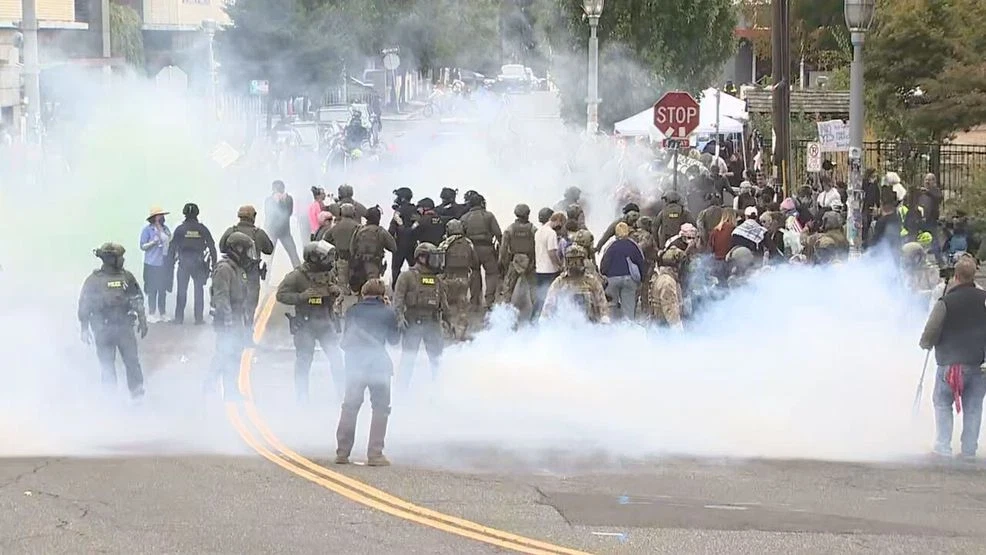
Introduction
The phrase “Portland riots” has become one of the most widely discussed terms associated with civil unrest in the United States during the early 2020s. Portland, Oregon, became a focal point of national attention as protests, demonstrations, clashes with law enforcement, and incidents of property damage unfolded over an extended period. News coverage, political debates, and social media discussions often portrayed the events in dramatically different ways, making it difficult for many people to understand what actually happened.
To fully understand the Portland riots, it is important to look beyond headlines and examine the broader context. The events did not occur in isolation. They were connected to nationwide discussions about policing, racial justice, public accountability, political polarization, and civil rights. Like many periods of social unrest throughout history, the situation in Portland reflected deeper tensions that had been developing for years.
One reason Portland attracted so much attention was the duration of the demonstrations. While many cities experienced protests for days or weeks, Portland saw recurring demonstrations for months. This sustained activity created a unique situation that drew local, national, and international media coverage.
The events also highlighted the complexity of modern protest movements. Large crowds often included people with different goals, beliefs, and strategies. Some participants focused on peaceful demonstrations, while others engaged in confrontational tactics that generated controversy and public debate.
Understanding the Portland riots requires careful examination of the causes, major events, public reactions, law enforcement responses, and long-term consequences. By exploring these factors in detail, a clearer picture emerges of one of the most significant episodes of civil unrest in recent American history.
Historical Background of Portland’s Activist Culture
Portland has long been known for its active political and social engagement. The city has a history of community organizing, grassroots activism, environmental advocacy, and public demonstrations. This culture of civic participation helped shape the events that later unfolded.
For decades, Portland residents have frequently used protests as a means of expressing concerns about political and social issues. Demonstrations addressing environmental protection, labor rights, housing affordability, immigration policies, and social justice have all played important roles in the city’s public life.
The city’s political landscape has also contributed to its reputation as a center for activism. Many residents support progressive policies and community-based initiatives, creating an environment where public demonstrations are relatively common compared to many other American cities.
At the same time, Portland has experienced political tensions between groups with differing ideological views. These tensions occasionally led to confrontations during rallies and counter-protests. Prior to the events associated with the Portland riots, the city had already witnessed several high-profile clashes involving political activists from opposing sides.
Understanding this historical background is important because it demonstrates that the events of 2020 and beyond were not entirely unprecedented. They emerged within a broader context of civic engagement, political activism, and public debate that had characterized Portland for many years.
The National Context Leading to the Protests
The unrest in Portland cannot be separated from the broader national environment in which it occurred. Across the United States, conversations about policing, racial inequality, criminal justice reform, and public accountability were becoming increasingly prominent.
Several incidents involving police use of force had already generated widespread concern before the demonstrations began. Advocacy organizations, community leaders, and activists were calling for reforms and greater transparency in law enforcement practices.
The situation intensified significantly following the death of George Floyd in Minneapolis in May 2020. The incident sparked protests throughout the United States and around the world. Millions of people participated in demonstrations calling for racial justice and police reform.
Like many cities, Portland quickly became a center for protest activity. Initial demonstrations focused on expressing solidarity with national movements and advocating for change. Large numbers of residents gathered to voice concerns about systemic issues and demand reforms.
The national political climate further amplified tensions. The United States was already experiencing significant political polarization, and debates surrounding the protests often reflected broader divisions within society. As a result, local events in Portland became part of a much larger national conversation.
Early Demonstrations and Public Response
The first major demonstrations in Portland attracted thousands of participants. Many gatherings were peaceful and focused on speeches, marches, community engagement, and public education. Protest organizers emphasized messages related to justice, accountability, and equality.
Participants represented diverse backgrounds and perspectives. Community members, students, advocacy groups, faith organizations, and local leaders all contributed to the demonstrations. For many people, participation reflected a desire to express concern about issues affecting communities across the country.
Public reaction varied considerably. Supporters viewed the demonstrations as an important exercise of democratic rights and civic engagement. They argued that peaceful protest has historically played a crucial role in advancing social progress and raising awareness about important issues.
Others expressed concerns about disruptions, public safety, and the potential for escalating conflict. Business owners worried about economic impacts, while residents living near protest areas sometimes experienced noise, road closures, and other disruptions.
Media coverage often focused on dramatic moments, which sometimes created confusion about the overall nature of the demonstrations. While many events remained peaceful, isolated incidents frequently received disproportionate attention due to their newsworthiness.
Escalation and the Emergence of Unrest
As weeks passed, some demonstrations evolved into more confrontational situations. Tensions between certain groups of protesters and law enforcement increased, leading to repeated clashes in specific areas of the city.
Several factors contributed to this escalation. Frustration among activists grew as many felt their concerns were not being adequately addressed. At the same time, repeated confrontations with police sometimes intensified emotions and increased hostility.
Incidents involving vandalism, property damage, and confrontations began receiving significant media attention. Government buildings, businesses, and other locations became targets during some episodes of unrest. These actions generated controversy both within and outside protest movements.
Many protest organizers publicly distinguished peaceful demonstrations from acts of vandalism or violence. They argued that the actions of a smaller number of individuals should not define the broader movement. Nevertheless, public perception was often influenced by images of damaged property and confrontations.
Law enforcement agencies faced difficult challenges as they attempted to balance public safety concerns with constitutional protections for free speech and assembly. Decisions regarding crowd control, arrests, and enforcement strategies became subjects of intense scrutiny and debate.
The escalation marked a turning point in how the events were perceived nationally. What had begun primarily as demonstrations increasingly became framed through discussions of unrest, security, and public order.
The Role of Federal Involvement
One of the most controversial aspects of the Portland unrest involved the presence of federal law enforcement personnel. Federal officers were deployed to protect federal property and respond to security concerns surrounding government facilities.
Supporters of federal involvement argued that additional resources were necessary to protect buildings and maintain public safety. They pointed to incidents involving property damage and attacks on federal facilities as justification for intervention.
Critics, however, contended that federal actions contributed to escalating tensions rather than reducing them. Some local officials expressed concern that the presence of federal personnel increased conflict and complicated efforts to manage demonstrations.
The issue quickly became a major national political debate. Discussions focused on federal authority, local governance, civil liberties, and the appropriate role of law enforcement during periods of unrest.
Media coverage frequently highlighted confrontations involving federal officers and protesters. Images and videos from these encounters circulated widely online, further increasing public attention and controversy.
The federal response became one of the defining features of the Portland riots narrative and remains a significant topic in discussions about the events today.
Media Coverage and Public Perception
Media coverage played a major role in shaping how people understood the Portland riots. Different news organizations often emphasized different aspects of the events, leading to varying interpretations among audiences.
Some reports focused on peaceful demonstrations and community activism. These stories highlighted participants’ goals, motivations, and demands while emphasizing the broader social issues being discussed.
Other coverage concentrated on property damage, confrontations, and law enforcement actions. These reports often portrayed the situation primarily through a public safety lens and emphasized incidents of unrest.
Social media further complicated public understanding. Videos, photographs, and personal accounts spread rapidly across digital platforms, sometimes providing valuable documentation and other times contributing to misinformation or incomplete narratives.
Political leaders also influenced public perception through statements, speeches, and policy proposals. Competing interpretations often reflected broader ideological disagreements about policing, protest movements, and public order.
As a result, many people developed very different understandings of the same events. This divergence illustrates how modern information environments can shape public perceptions during periods of social conflict.
Conclusion
The Portland riots emerged from a complex combination of local history, national social movements, political tensions, and ongoing debates about justice and public accountability. While often discussed as a single event, they were actually a series of evolving demonstrations, confrontations, and public responses that unfolded over an extended period.
Understanding these events requires examining multiple perspectives and recognizing the distinction between peaceful protest activities and incidents of unrest. It also requires acknowledging the broader social and political context that influenced developments on the ground.
The legacy of the Portland riots continues to shape discussions about protest movements, law enforcement practices, civil liberties, and democratic participation in the United States. Their significance extends far beyond Portland itself, serving as an important case study in contemporary social and political history.









Leave a Reply