
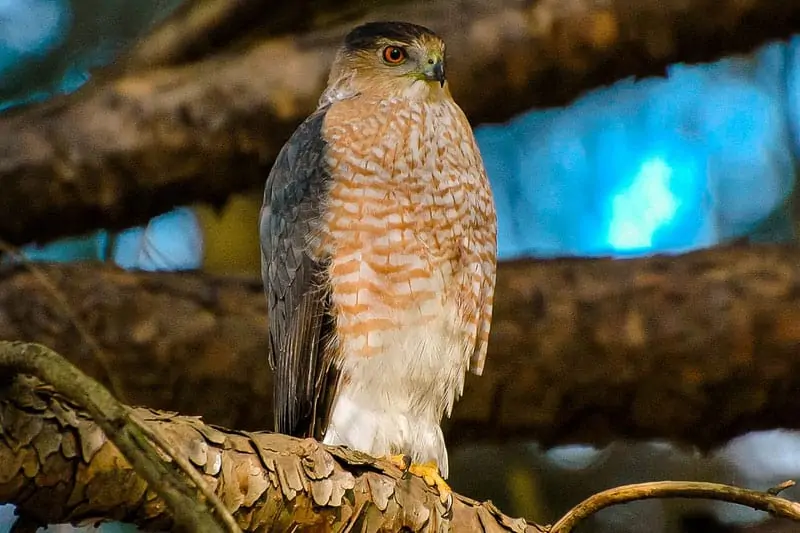
Introduction to Hawks in Texas
Texas is one of the richest states in the United States when it comes to bird diversity, and hawks are a major part of that ecosystem. With its vast landscapes ranging from deserts and grasslands to forests and coastal wetlands, Texas provides an ideal environment for multiple hawk species to thrive throughout the year.
Hawks are birds of prey, also known as raptors, and they play a crucial role in maintaining ecological balance. They help control populations of rodents, small mammals, reptiles, and even other birds. In Texas, hawks are not just wildlife—they are part of the natural identity of the state.
One of the most interesting things about hawks in Texas is their variety. Some species live in the state year-round, while others migrate during different seasons. This makes Texas a hotspot for bird watchers, researchers, and nature enthusiasts who want to observe hawks in their natural environment.
Understanding hawks in Texas is not just about identifying birds. It is also about understanding their behavior, migration patterns, hunting techniques, and their role in the ecosystem. This guide will break everything down in a simple but expert-level way.
Major Hawk Species Found in Texas
Texas is home to several hawk species, each with unique characteristics and behaviors. Among the most commonly seen are the Red-tailed Hawk, Cooper’s Hawk, Red-shouldered Hawk, and Harris’s Hawk. Each species adapts differently to Texas’s diverse environments.
The Red-tailed Hawk is one of the most widespread and easily recognizable hawks in North America. In Texas, it is commonly seen soaring over open fields and highways. Its reddish tail and broad wings make it relatively easy to identify even from a distance.
Cooper’s Hawks are more secretive and are often found in wooded areas or suburban neighborhoods. They are agile hunters known for chasing smaller birds through dense trees. In Texas, they are frequently spotted near bird feeders, where prey is abundant.
Another important species is the Harris’s Hawk, which is particularly unique because it hunts in groups. This behavior is rare among raptors and makes it one of the most fascinating hawks found in the southern parts of Texas, especially in desert regions.
The Red-Tailed Hawk in Texas Ecosystems
The Red-tailed Hawk is arguably the most iconic hawk species in Texas. It is often seen perched on telephone poles, fence posts, or soaring high above open landscapes. Its adaptability allows it to thrive in almost every region of the state.
One of the reasons this hawk is so successful is its flexible diet. It primarily feeds on rodents like mice, rats, and squirrels, but it can also hunt reptiles and even small birds when necessary. This adaptability makes it a dominant predator in Texas ecosystems.
Red-tailed Hawks are also known for their impressive flight patterns. They often soar in wide circles using thermal air currents, conserving energy while scanning the ground for prey. This behavior is especially visible in rural parts of Texas where open land provides ideal hunting conditions.
In terms of nesting, Red-tailed Hawks prefer tall trees or cliff edges. In urban Texas areas, they have even adapted to nesting on tall buildings and communication towers, showing their remarkable ability to coexist with human development.
Cooper’s Hawks and Urban Adaptation in Texas
Cooper’s Hawks are smaller and more agile compared to Red-tailed Hawks, and they are particularly well adapted to forested and suburban environments in Texas. Their long tails and short wings allow them to maneuver quickly through dense trees.
In many Texas cities, Cooper’s Hawks have become increasingly common. They often hunt near bird feeders, where small birds gather in large numbers. This has made them a familiar sight for homeowners who enjoy birdwatching in their backyards.
Despite living close to humans, Cooper’s Hawks are extremely stealthy. They rely on surprise attacks rather than long chases. Their hunting style is fast, direct, and highly efficient, making them one of the most skilled bird hunters in Texas.
Their ability to adapt to urban environments highlights how wildlife can adjust to human expansion. Instead of avoiding cities, Cooper’s Hawks have learned to use them as hunting grounds, proving their intelligence and flexibility.
Harris’s Hawks: The Social Hunters of Texas
Harris’s Hawks are one of the most unique hawk species found in Texas, especially in the southern desert regions. Unlike most hawks, which hunt alone, Harris’s Hawks often hunt in groups, making them highly cooperative predators.
This social behavior gives them a significant advantage when hunting larger or more agile prey. Group hunting allows them to surround and trap animals more effectively than solitary hunters. This behavior is rare among raptors and makes them a subject of scientific interest.
In Texas, Harris’s Hawks are commonly found in arid landscapes such as deserts, scrublands, and open woodlands. They are highly adaptable to hot climates and can survive in environments where other hawks might struggle.
Their social structure is also complex. They often form stable family groups where multiple hawks work together not just for hunting but also for raising young. This cooperative behavior strengthens their survival rate in harsh environments.
Swainson’s Hawks and Migration Patterns in Texas
Swainson’s Hawks are migratory birds that spend part of the year in Texas before traveling to South America for the winter. They are commonly seen in Texas during the breeding season, particularly in open grasslands and agricultural areas.
These hawks are known for their long-distance migration, one of the most impressive journeys among North American raptors. They travel thousands of miles between North and South America every year, following seasonal food availability.
In Texas, Swainson’s Hawks primarily feed on insects, small mammals, and reptiles. During migration, they can sometimes be seen gathering in large groups, especially in areas with abundant food sources.
Their presence in Texas is an important indicator of ecosystem health. Since they rely heavily on open land and insect populations, changes in their numbers can reflect environmental changes in agricultural regions.
Sharp-Shinned Hawks in Texas Woodlands
Sharp-shinned Hawks are among the smallest hawks found in Texas, but they are also among the most agile. They are often found in dense forests where they hunt small birds with incredible speed and precision.
Their compact size allows them to move quickly through thick vegetation, making them highly effective ambush predators. In Texas, they are more commonly seen during migration seasons rather than year-round.
These hawks are known for their stealthy hunting techniques. They often remain hidden until the very last moment before striking their prey. This makes them difficult to observe in the wild despite their presence.
Sharp-shinned Hawks contribute to maintaining balance in bird populations by controlling smaller songbird species. Their role, though less visible, is essential in forest ecosystems across Texas.
Conclusion
Hawks in Texas represent one of the most diverse and fascinating groups of birds of prey in North America. From the adaptable Red-tailed Hawk to the social Harris’s Hawk, each species plays a unique role in the state’s ecosystems.
Texas provides a wide range of habitats that support both resident and migratory hawk species, making it a key region for bird conservation and observation. Understanding these birds helps us appreciate the complexity of nature and the importance of preserving wildlife habitats.













Leave a Reply